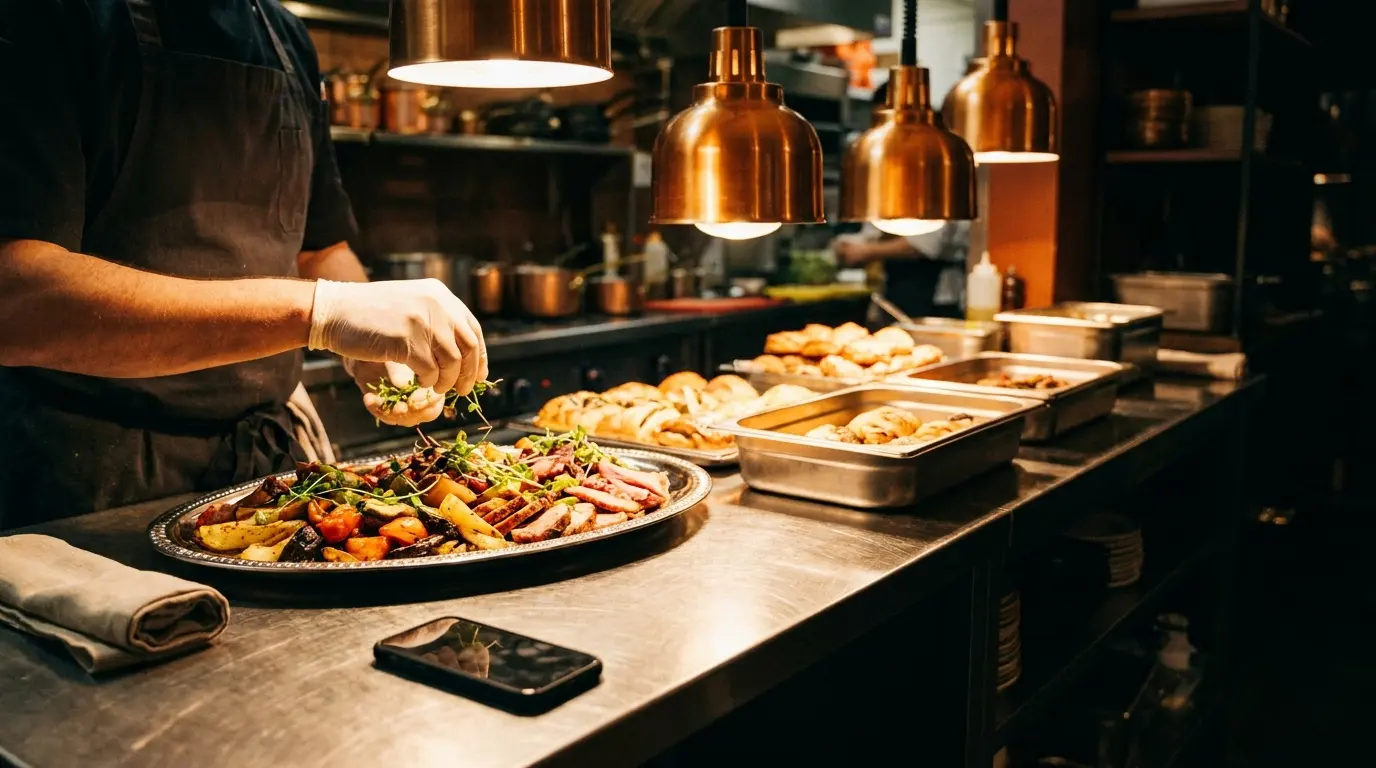
For restaurants that cater
A catering enquiry is worth ten covers.
It arrives while you are plating forty.
So it goes to voicemail, and the office manager on the other end books somewhere that picked up.
This line is answering right now
“John” is the AI catering manager for a working restaurant in Brandon, Florida. He reads that restaurant’s real catering menu and will take your enquiry like any other caller’s.
(813) 213-4090A live line belonging to a real business. It answers, applies the owner’s rules and captures the enquiry; confirming an order still requires the owner.
The short answer
Catering is mostly a speed problem. On the largest US catering marketplace, 28% of searches were for food needed within 24 hours and a third of orders placed had a lead time under a day — so the order goes to whoever can confirm first, and that call lands in the middle of service.
You will see claims that restaurants take 42 hours to answer a catering enquiry. That figure is a general web-lead statistic from an unrelated study, relabelled. No catering-specific response-time study exists, and we are not going to invent one.
- 28% of catering searches on ezCater were for food needed within 24 hours.
- 33% of orders placed had a lead time of 24 hours or less.
- 42% of restaurant operators reported their restaurant was not profitable in 2026 — which is why a higher-ticket, pre-paid order matters.
- The widely-quoted “42 hours to respond to a catering enquiry” is a mislabelled general web-lead figure, not catering data.
Why catering specifically
The call you can least afford to miss arrives when you can least afford to take it
The caller is qualified and impatient
They have a date, a headcount and a budget. Whoever answers first has an enormous advantage.
It is a conversation, not a message
Guest counts, dietary requirements, timing. A voicemail cannot do that work.
Nobody owns the enquiry
Front of house is serving, the kitchen is cooking, the owner is doing both.
So the highest-margin order in the building goes elsewhere
Quietly, and without anybody noticing it happened.
What the agent does
It answers from your menu, under your rules
Answers in the restaurant’s name
Not a generic assistant. It knows whose kitchen it is speaking for.
Reads the real catering menu
From your own data, so it cannot invent a dish or quote a price that is not yours.
Applies your business rules
Minimum guest counts, lead times, deposits — configuration, not improvisation.
Captures the enquiry in full
Date, headcount, requirements, contact details.
Never confirms on its own
Approval stays with the owner. The agent prepares; you decide.
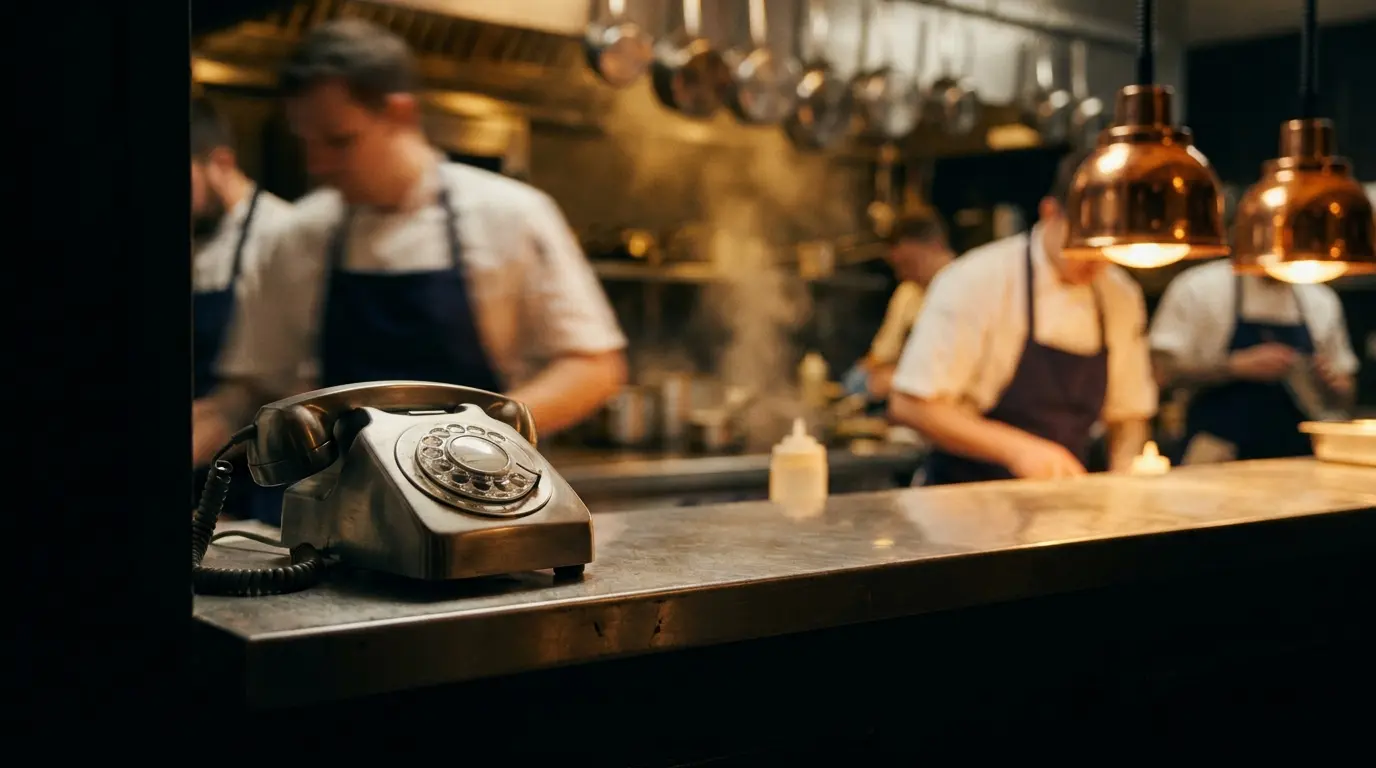 Mid-service, every time
The same capability, other businesses
Catering is the demonstration, not the product
The same phone agent answers a plumber’s overflow calls or a clinic’s after-hours line. What changes is the information it reads and the rules it enforces — which is exactly why you can hear it working before you buy anything.
Who does this
What SidRatnam.com does about catering
SidRatnam.com runs an AI phone agent that answers catering calls in the restaurant’s name, quotes from that restaurant’s real catering menu, applies the owner’s rules on lead time and minimum numbers, and captures the enquiry for the owner to approve. It is live today on a working restaurant’s line.
What that includes: answering catering calls during service, answers drawn from your real catering menu, enforcement of your lead times and minimums, and full capture of date, headcount and requirements.
What it contributes to: catching high-value orders that would otherwise reach voicemail.
Live today
Evidence
What the research actually says
Every figure carries its source, date, the population it was measured across, and whether it is an observation or a projection.
28% of catering searches were for food needed within 24 hours, and 33% of orders placed had a lead time of 24 hours or less — so a catering request is usually a speed problem, not a planning problem.
observed ezCater marketplace data
23 June 2026 · searches and orders on the ezCater marketplace, trailing 12 months · June 2025 – May 2026
42% of restaurant operators reported their restaurant was not profitable, and 60% reported softer customer traffic.
estimated National Restaurant Association, 2026 State of the Restaurant Industry
12 February 2026 · US restaurant operators; sample size not published in the free summary · surveyed 2025–26
In a survey of 3,000 smartphone users, local services was the category people were most likely to phone (69%), 47% said they would look elsewhere if a business had no phone number in its search result, and 51% called in order to book an appointment.
estimated Google / Ipsos, “The Role of Click to Call in the Path to Purchase”
September 2013 · 3,000 smartphone users who had purchased in the category · surveyed July 2013
Connected problems
These turn out to be the same conversation
How do I stop losing jobs to missed calls?
How do I reduce DoorDash fees?
How do I get back to people faster?
This sits under get more customers and increase revenue.
Hear it, then decide
Call the number above. Then the free analysis looks at what your own phone is currently costing you.